ملف:Andromeda galaxy.jpg
اذهب إلى التنقل
اذهب إلى البحث
حجم هذه المعاينة: ٦٠٠ × ٦٠٠ بكسل. الأبعاد الأخرى: ٢٤٠ × ٢٤٠ بكسل | ٤٨٠ × ٤٨٠ بكسل | ٧٦٨ × ٧٦٨ بكسل | ١٬٠٢٤ × ١٬٠٢٤ بكسل | ٢٬٠٤٨ × ٢٬٠٤٨ بكسل | ٦٬٢٠٠ × ٦٬٢٠٠ بكسل.



الملف الأصلي (٦٬٢٠٠ × ٦٬٢٠٠ بكسل حجم الملف: ٧٫٩٨ ميجابايت، نوع MIME: image/jpeg)

ملخص
| الوصف |
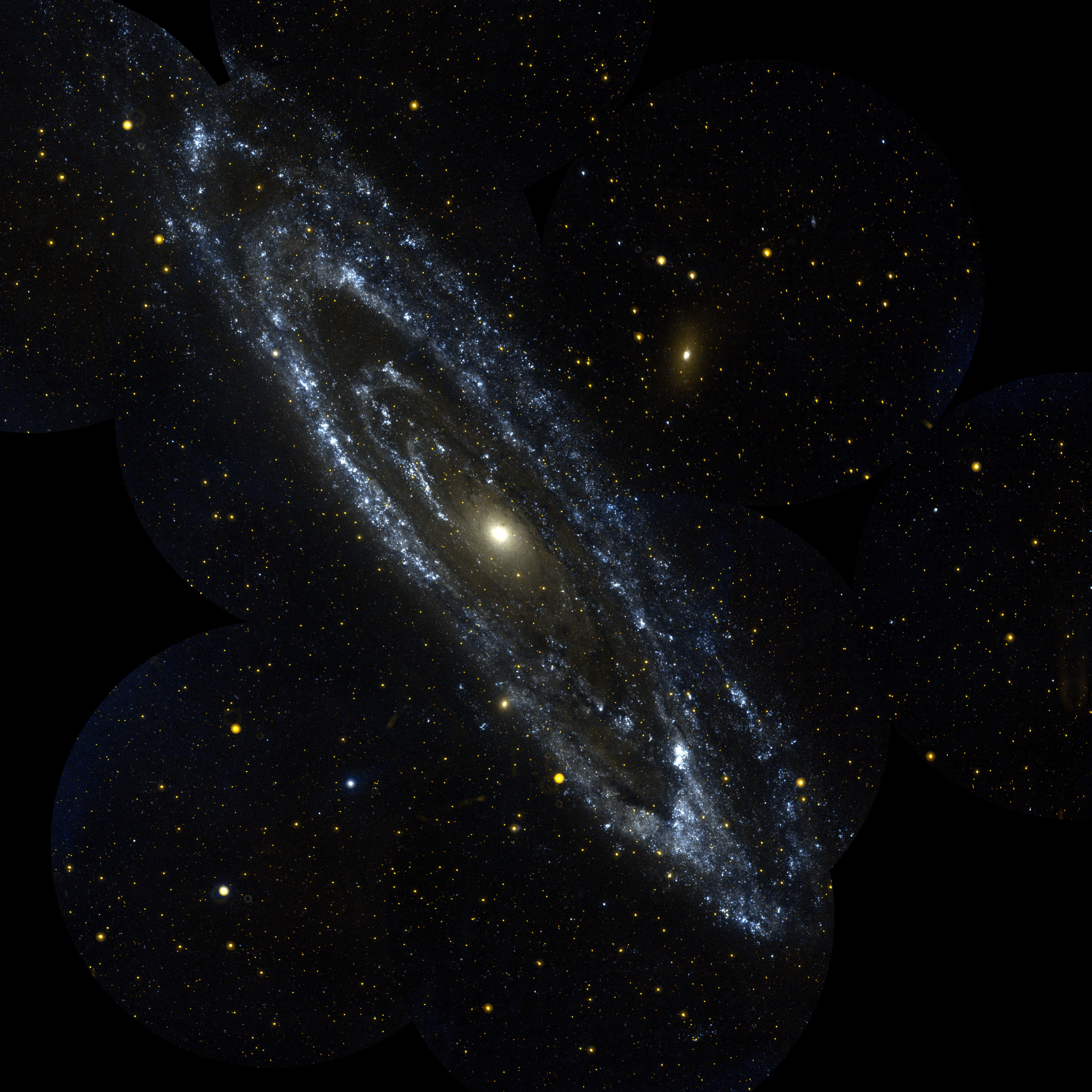
English: This image is a Galaxy Evolution Explorer observation of the large galaxy in Andromeda, Messier 31. The Andromeda galaxy, spanning 260,000 light-years across, is the most massive in the local group of galaxies that includes our Milky Way. Andromeda is the nearest large galaxy to our own at approximately 2.5 million light-years away. The image is a mosaic of 10 separate Galaxy Evolution Explorer images taken in September, 2003. This image is a two-color composite, where blue represents far-ultraviolet light and red is near-ultraviolet light, and shows blue regions of young, hot, high mass stars tracing out the spiral arms where star formation is occurring, and the central orange-white "bulge" of old, cooler stars formed long ago. The star forming arms of Messier 31 are unusual in being quite circular rather than the usual spiral shape. Several companion galaxies can also be seen. These include Messier 32, a dwarf elliptical galaxy directly below the central bulge and just outside the spiral arms, and Messier 110 (M110), which is above and to the right of the center. M110 has an unusual far ultraviolet bright core in an otherwise "red," old star halo. Many other regions of star formation can be seen far outside the main body of the galaxy.
العربية: مجرة أندروميدا، النواة في الوسط والأذرع الحلزونية تشكل قرصًا، وتُرى تجمعات نجمية كروية حول القرص. |
| التاريخ | (released) |
| المصدر | https://photojournal.jpl.nasa.gov/catalog/PIA04921 |
| المؤلف | NASA/JPL/California Institute of Technology |

|
فُهرِست هذه الصُّورة أَو هذا التَّسجيل المرئي لدى Jet Propulsion Laboratory التَّابعة لوكالة الفضاء الأَمريكيَّة (ناسا) تحت المُعرِّف PIA04921. لا يُشير هذه الوَسم إلى حالة حقوق التَّأليف والنَّشر الخاصَّة بالعمل المُرفَق؛ لا يزال وَسم حقوق التَّأليف والنَّشر مَطلُوباً، راجع كومنز:ترخيص لمزيدٍ من المعلومات. لغات أخرى:
|
ترخيص

|
يقع هذا العمل في النِّطاق العامّ في الولايات المُتحدة الأمريكيَّة لأَنَّه عملٌ خالِصٌ من إِنتاج وكالة الفضاء الأمريكيَّة. تنصُ حقوق التَّأليف والنَّشر الخاصَّة بوكالة الفضاء الأمريكيَّة على أنَّ "أعمال الوكالة غير مَحميَّة بحقوق التَّأليف والنَّشر ما لم يُذكر خلافُ ذلك". لمزيدٍ من المعلومات انظر القالِب {{PD-USGov}} وصفحة حقوق التَّأليف والنَّشر الخاصَّة بالوكالة وصفحة سياسة الصُّور الخاصَّة بمُختبر الدَّفع النَّفَّاث. |  |
 |
تنبيهات:
|

تاريخ الملف
اضغط على زمن/تاريخ لرؤية الملف كما بدا في هذا الزمن.
| زمن/تاريخ | صورة مصغرة | الأبعاد | مستخدم | تعليق | |
|---|---|---|---|---|---|
| حالي | ٢١:٤٣، ١٢ مايو ٢٠١٩ | | ٦٬٢٠٠ × ٦٬٢٠٠ (٧٫٩٨ ميجابايت) | wikimediacommons>FriedrichKieferer | Better quality. |
استخدام الملف
ال3 صفحات التالية تستخدم هذا الملف:
